
Our Lesson
Towards the end of 2024, we took our 2023 Runaway Venturist on its first off-grid trip to Lake Panasoffkee Wildlife Management Area in Sumter County, Florida. The days were perfect, and while the evenings were a little chilly, it made for some great camping weather.
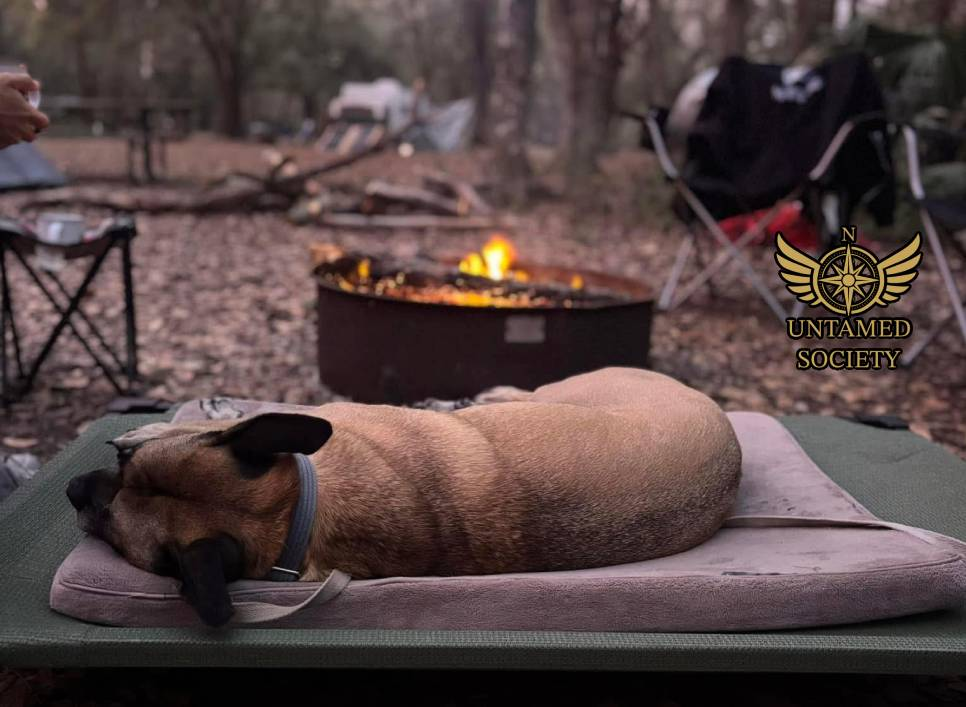
Of course, we brought our dog, Poe, along for the adventure. He had the time of his life — running, sniffing, and exploring every corner of the woods. The photo of Poe above was taken right there at Lake Panasoffkee.
A few days after we got back home, though, we noticed something wasn’t right. We found a tick on him (not unusual in the Florida woods), but he soon started acting off. Poe was sleeping too much, wouldn’t eat, was panting strangely, and just wasn’t himself. The vet confirmed he had picked up some kind of virus and was running a fever.
Looking back, we remembered a spot marked “Gut Pit.” When I walked back there, I saw piles of old, dried bones scattered around. In hindsight, we should have kept him away from that area, and it may have been where he picked up the sickness.
That experience made me think: a lot of people who bring their dogs camping in Florida, especially those not from here, might not realize the unique dangers our state’s wild places hold.
So here are 5 dangers every dog owner must know before camping with dogs in Florida.
- Florida Heat
- Florida is known for its humid, hot, and stormy summers. Bringing your dog along to camp and hike is always enjoyable, but you need to be aware of the risks — even during what we call “winter.”
- The ground here can get extremely hot, even when the air temperature feels comfortable. Many Florida trails are out in the open, with uncovered sugar sand. That sand not only holds heat but is also abrasive on your dog’s paws.
- Always check the ground temperature before heading out, and remember to pack plenty of water. Unlike us, dogs can’t cool themselves by sweating, so they overheat much faster than we do.
- Insects and Parasites
- Unlike up north, Florida has insects year-round. Mosquitoes, scorpions, fire ants, no-see-ums, yellow flies, ticks, spiders, and plenty of others that thrive in our warm climate and can quickly become a nuisance for both you and your dog.
- To help protect your pup, always bring pet-safe bug spray and stay aware of your surroundings. A little prevention goes a long way in keeping your dog from getting bitten, stung, or injured.
- Alligators and Snakes
- If you’re near a body of water in Florida and wondering whether reptiles are around, just assume the answer is yes. Where there’s water, there are most likely alligators and snakes.
- The good news is that Florida doesn’t have as many venomous snakes as some other states, but we still have a few you need to watch for. These include water moccasins (cottonmouths), several species of rattlesnakes, and coral snakes.
- Depending on where you camp, you might also encounter alligators — and in some brackish areas of South Florida, even American crocodiles. For your dog’s safety, never walk them near the water’s edge. Alligators see small pets as prey, and many venomous snakes live close to water.
- Alligators are stealthy, powerful predators. Don’t take the risk — keep your dog well away from the shoreline.
- Water Safety and Bacteria
- Florida is full of water. Rivers, canals, ponds, and even puddles after a rain. But while it might look refreshing, these are not safe drinking sources for your dog.
- Stagnant ponds and lakes can carry harmful bacteria, algae, or parasites. If your dog drinks from or swims in the wrong spot, they can get sick quickly.
- The safest option is to bring plenty of clean water and a collapsible bowl, and if your dog is going to swim, stick to fresh, moving water where the risk is much lower. Just refer to #3 before allowing your pup to swim.
- Wandering and Wildlife
- Florida’s forests are full of distractions — from squirrels and raccoons to deer, coyotes, and even bobcats. An unleashed dog can quickly wander off, get lost, or run into trouble with local wildlife.
- The best way to avoid a nightmare search-and-rescue is to keep your dog on a leash, long lead, or GPS collar. And remember: park rules and leash laws exist for a reason — they protect you, your dog, and everyone else on the trail.
Summary
Camping in Florida with your dog can be one of the best adventures you share together — but it comes with risks that shouldn’t be ignored. Our experience with Poe was a reminder that even when you think you’re being careful, Florida’s wild side can surprise you.
By planning ahead, keeping your dog safe from the heat, bugs, wildlife, and unsafe water, you’ll avoid the dangers and focus on what matters most: making memories with your best friend by your side. Always remember 5 Dangers Every Dog Owner Must Know while camping in Florida.
If you have any questions please feel free to reach out to our contacts page!